
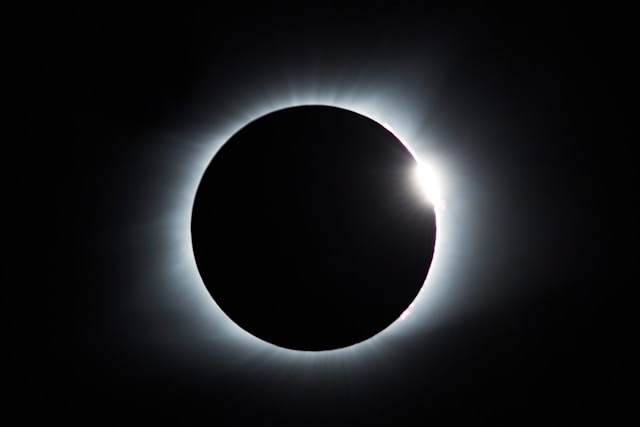
Get ready to look to the skies because we’re talking about one of nature’s most awe-inspiring events: the solar eclipse. But before you whip out those eclipse glasses and start gazing, let’s talk about something super important: protecting your eyes.
What’s the Buzz About Solar Eclipses?
Solar eclipses happen when the moon passes between the Earth and the sun, casting a shadow on our planet. It’s a jaw-dropping spectacle that captures the imagination of sky gazers worldwide.
But What About Eye Safety?
Here’s the deal: staring directly at the sun, even during an eclipse, can seriously damage your eyes. The sun emits harmful ultraviolet (UV) radiation that can burn your retinas, leading to permanent vision loss. Yikes!
Enter: Eclipse Glasses
Eclipse glasses are like superhero shields for your eyes. They’re specially designed to filter out the harmful UV rays, allowing you to safely view the eclipse without risking eye damage. But not all glasses are created equal, so make sure yours are certified for solar viewing.
The 20-20-20 Rule
Even with eclipse glasses, it’s essential to take breaks from staring at the sun. Follow the 20-20-20 rule: every 20 minutes, take a 20-second break, and look at something 20 feet away. Your eyes will thank you later.
But What If I Don’t Have Eclipse Glasses?
No worries! There are plenty of other safe ways to experience the eclipse:
- Pinhole Projector: Poke a small hole in a piece of cardboard and hold it up to the sun. You’ll see a projection of the eclipse on the ground or another surface.
- Live Streams: Many organizations live stream eclipses online, so you can watch from the safety of your home.
- Indirect Viewing: Use a telescope or binoculars to project an image of the eclipse onto a piece of paper or cardboard.
So there you have it: with a little bit of preparation and the right safety precautions, you can enjoy the magic of a solar eclipse without putting your precious peepers at risk. Stay safe, keep your eyes protected, and enjoy the celestial show!
References:
- Chou, B. R. (2017). A Complete Guide to the Total Solar Eclipse of August 21, 2017. Oxford University Press.
- Mainster, M. A., & Rozema, J. J. (2017). American Astronomical Society Solar Eclipse Task Force. American Astronomical Society Solar Eclipse Task Force.
 The Pharmers Almanac