
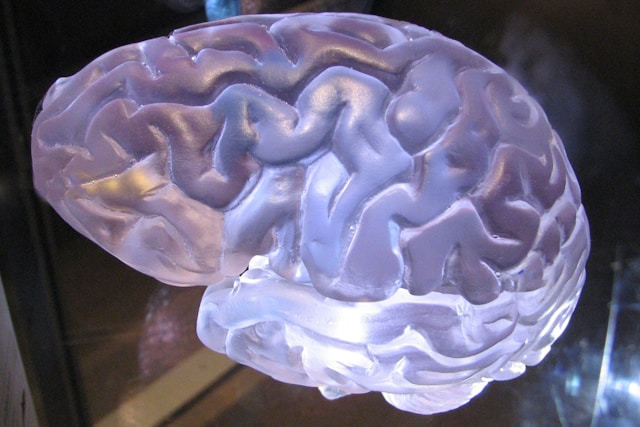
Alright, let’s talk about something that’s more than just skin deep—how obesity might be messing with your brain. We all know that carrying extra weight isn’t great for things like your heart, blood pressure, or diabetes risk. But did you know it could also be impacting your cognitive health as you age? Yeah, it’s a bit of a plot twist.
The Weighty Issue
Here’s the deal: For years, researchers have been noticing that there might be a link between obesity and how well our brains work, especially as we get older. Studies show that people who are overweight or obese might struggle more with memory, learning new things, and even processing information quickly. But here’s where it gets tricky—not all the research agrees. Some studies say yes, there’s a problem. Others? Not so much. So, what gives?
BMI: The Old-School Metric
Most of these studies have been using Body Mass Index (BMI) to measure obesity. You know, that number you get when you divide your weight by your height squared. But BMI has its flaws—it doesn’t tell you how much of that weight is fat vs. muscle, or where that fat is hanging out on your body. And as you might’ve guessed, not all fat is created equal when it comes to your health.
Enter WWI: The New Kid on the Block
That’s where something called the Weight-adjusted Waist Index (WWI) comes in. It’s a newer way to measure obesity that takes into account your waist size and weight. The idea is that this can give a clearer picture of how much fat is around your belly—also known as abdominal obesity—which is the kind of fat that’s really bad for your health. And guess what? This measure might also be better at predicting how your brain will hold up as you age.
The Big Picture
So, a bunch of smart people dove into data from the National Health and Nutrition Examination Survey (NHANES) to see what’s up. They looked at adults aged 60 and over and found that those with a higher WWI score (meaning more belly fat) tended to perform worse on tests that measure things like memory, learning, and even how fast they can think on their feet.
Even more interesting? The relationship between WWI and cognitive function wasn’t always straightforward. Sometimes, it was like hitting a tipping point—once someone’s WWI hit a certain level, their cognitive abilities started to drop more sharply. And this effect seemed to be stronger in men than women, and more pronounced in younger seniors than older ones.
Why Should You Care?
Understanding this connection between obesity—especially abdominal obesity—and cognitive decline is super important. It suggests that tackling belly fat could be a way to protect your brain as you age. It also means that maybe, just maybe, we should be moving beyond BMI and paying more attention to where our fat is sitting and how it’s affecting us.
In the end, this research isn’t just about looking good—it’s about living well. So next time you think about your health, don’t just focus on the number on the scale. Think about where you’re carrying that weight and what it might mean for your brain in the long run. Your future self might just thank you.
Qiu X, Kuang J, Huang Y, Wei C, Zheng X. The association between Weight-adjusted-Waist Index (WWI) and cognitive function in older adults: a cross-sectional NHANES 2011-2014 study. BMC Public Health. 2024 Aug 8;24(1):2152. doi: 10.1186/s12889-024-19332-w. PMID: 39118100; PMCID: PMC11308487.
 The Pharmers Almanac