
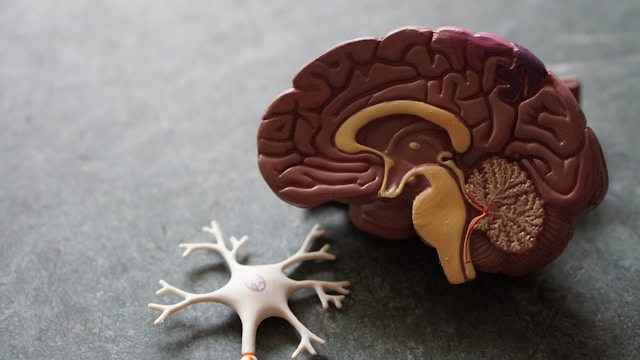
Alzheimer’s disease (AD) is the neurodegenerative heavyweight of the world, especially among the elderly. But if you’re picturing it as just “memory loss,” you’re in for a surprise. This disease involves an intricate web of factors that make it a relentless memory thief and cognitive challenge.
Alzheimer’s in a Nutshell (or a Tangled Ball of Plaques)
Think of Alzheimer’s as a malfunctioning cleanup system in the brain. Two main villains get the spotlight here: amyloid-beta plaques and neurofibrillary tangles. These bad guys are like sticky, unwanted visitors that start clogging up neurons, messing with memory, and confusing cognition. As a result, thinking and remembering go downhill fast. Over the past two decades, Alzheimer’s has gotten deadlier and way more common, becoming a primary cause of death among seniors.
Despite billions spent on research, we still don’t entirely understand what starts the whole mess, but scientists have a prime suspect in mind: neuroinflammation. You’ve likely heard of inflammation in terms of a sore throat or swollen joint. Now imagine that, but in your brain, and lasting much longer. It’s a fundamental part of Alzheimer’s and isn’t going away anytime soon.
The Brain and the (Weirdly Crucial) Gut Microbiome Connection
Yep, your gut bacteria might just be the dark horse in this Alzheimer’s story. There’s more bacteria in your gut than you might want to know, but they do a lot of good—regulating immune responses, breaking down food, and even influencing how you feel. Scientists are finding that an unbalanced gut microbiome can mean trouble for your brain, contributing to neuroinflammation and even making Alzheimer’s worse.
Here’s how the gut-brain dialogue works: The gut microbiome influences brain health through the “gut-brain axis.” The two chat regularly through the vagus nerve, immune system, and even the endocrine system. With a healthy microbiome, anti-inflammatory substances help keep brain inflammation at bay. But when things go south—say, with a diet low in fiber or after heavy antibiotic use—your gut microbiota gets out of whack. This can fuel inflammation, oxidative stress, and even neurotoxins, which can reach your brain and add to Alzheimer’s risk.
What Exactly Is Going Wrong with the Gut in Alzheimer’s?
In Alzheimer’s patients, studies reveal less diversity in gut bacteria and an uptick in “bad” bacteria. The short of it is this: a chaotic microbiome equals a chaotic brain environment. This imbalance seems to support the buildup of amyloid plaques and tangles, upping inflammation and making life harder for neurons.
For instance, some gut bacteria produce amyloid proteins (the same type linked to Alzheimer’s). These bacterial byproducts can sneak past the blood-brain barrier, creating more stress for your brain’s cleanup crew, the microglia. Think of microglia as the bouncers of the brain—they’re supposed to kick out anything that doesn’t belong. When overloaded, they go into overdrive, creating inflammation and inadvertently harming healthy neurons.
The Neuroinflammation Cycle: Making Things Worse
Imagine your brain cells are workers in an overburdened factory. There’s garbage (plaques and tangles) piling up everywhere, and the cleanup crew (microglia and astrocytes) is overwhelmed. To make matters worse, inflammation keeps ramping up, and neurotoxins are released, damaging neurons further. It’s a vicious cycle that leaves your brain vulnerable, degrading memory, mood, and cognition.
Can Gut Health Help Us Battle Alzheimer’s?
Targeting the gut microbiome may open new doors in Alzheimer’s prevention and treatment. While clinical evidence is still building, here’s what we know:
- Gut-friendly diets rich in fiber and probiotics could reduce inflammation, keeping both gut and brain healthy.
- Probiotics and prebiotics might balance out gut bacteria, lowering neuroinflammation and potentially easing Alzheimer’s symptoms.
- New therapies that target gut microbiota could complement existing Alzheimer’s drugs. But we’re still far from these options being common practice.
The Road Ahead: Research Is Just Getting Started
The gut-brain axis has been on the scientific radar for a century, but technology only recently caught up to reveal what’s really happening. With advanced tools like DNA sequencing and metagenomics, researchers are diving deeper into the microbiome. This means more specific data on what a “healthy” gut looks like for Alzheimer’s patients.
Alzheimer’s is a long game, but the new focus on gut health adds an intriguing twist.
Yang J, Liang J, Hu N, He N, Liu B, Liu G, Qin Y. The Gut Microbiota Modulates Neuroinflammation in Alzheimer’s Disease: Elucidating Crucial Factors and Mechanistic Underpinnings. CNS Neurosci Ther. 2024 Oct;30(10):e70091. doi: 10.1111/cns.70091. PMID: 39460538; PMCID: PMC11512114.
 The Pharmers Almanac